Dermaplaning: The Complete Guide to a Smoother Facial Add-On
Learn what dermaplaning is, whether hair grows back thicker, who should skip it, and how to care for your skin, with local guidance from Copley, Ohio.
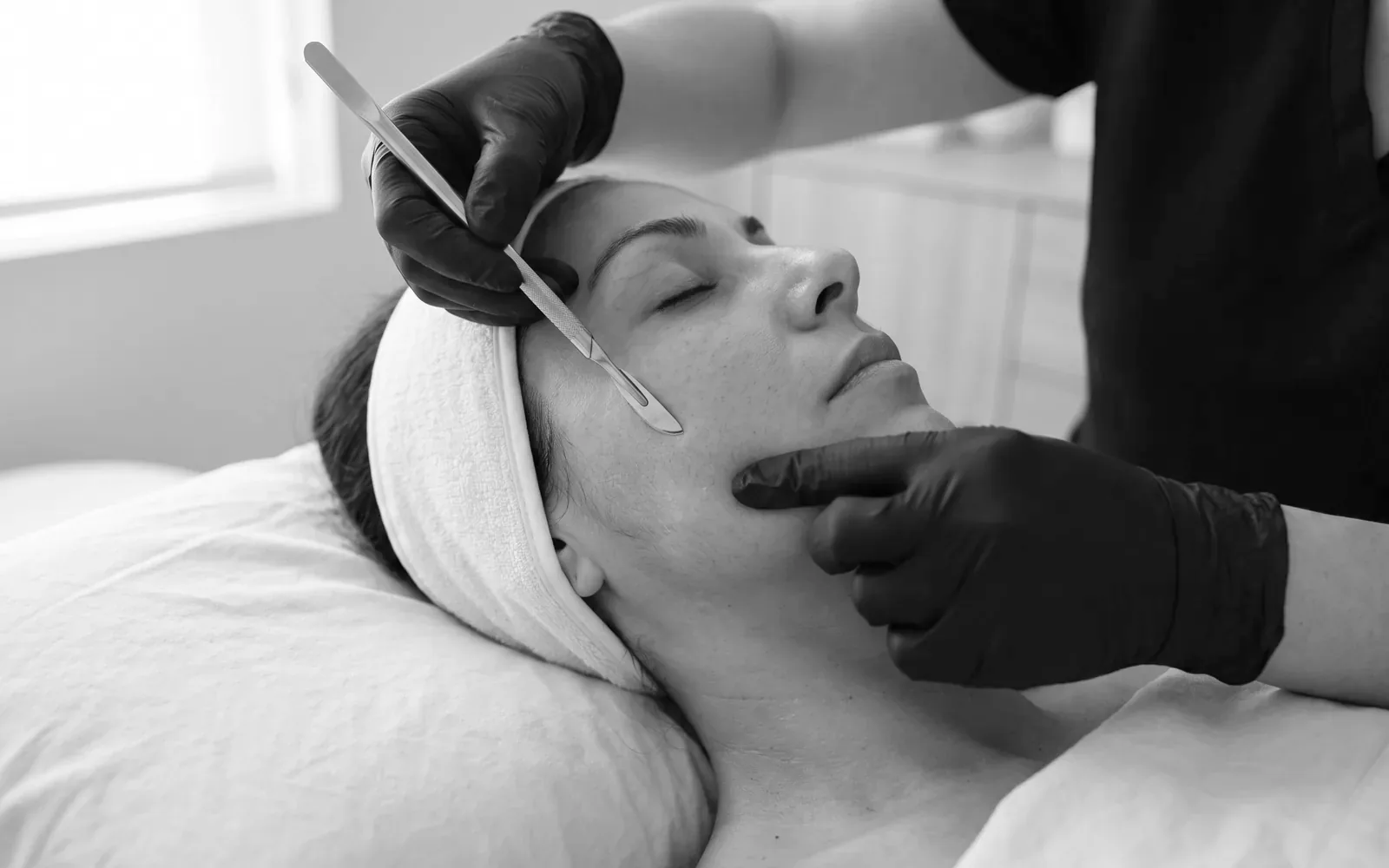
Dermaplaning is a gentle, manual exfoliation in which a trained esthetician glides a sterile blade across clean, dry skin to lift away dull surface cells and fine facial hair, often called peach fuzz. The result many clients notice is a smoother, softer feel and a brighter-looking complexion. At BZ Esthetics Studio in Copley, Ohio, dermaplaning is a 25-minute add-on that pairs with your facial.
This guide is for anyone in Copley, Fairlawn and the surrounding Summit County area who is curious about dermaplaning and wants straight answers: what it is, whether hair grows back thicker, who should skip it, how it feels, and how to care for your skin afterward.
What You Need to Know About Dermaplaning
- What it is: a physical exfoliation done by hand with a sterile blade, held at a low angle and moved in short, light strokes.
- What it removes: the topmost layer of dull, dry surface cells and the fine, pale hair that sits on cheeks, forehead and jawline.
- How long it takes: the add-on is 25 minutes. Many clients pair it with a facial, and your esthetician can help you plan the visit.
- What it feels like: many clients describe a light, feathery scraping sensation, not pain. It is quiet and calm.
- Downtime: many clients leave with no visible downtime, though skin can look a little pink or feel slightly sensitive for a short while.
- Who should ask first: anyone with active breakouts, certain medications, sensitive skin conditions or pregnancy should talk with their healthcare provider before booking.
- How often: many clients book it every few weeks, often timed with their regular facial.
What Is Dermaplaning, Exactly?
Dermaplaning is exfoliation that you can see and feel working. Instead of a scrub with grains or an acid that loosens dead cells, your esthetician uses the edge of a sterile blade to lightly sweep across the surface of the skin. Because the blade moves across the very top layer only, it picks up dull, flaky cells and the soft vellus hair that grows on the face.
Vellus hair is the fine, light hair most of us have on our cheeks, upper forehead and along the jaw. It is not the same as the darker, thicker hair on the brows or lip. Many people never think about it until their makeup looks patchy or their skin feels less than silky. Removing it, along with surface buildup, is why dermaplaning is popular before special events and photographs. Cleveland Clinic describes medical dermaplaning, in which a healthcare provider uses a special instrument called a dermatome, as a minimally invasive cosmetic procedure that removes hair and skin cells, and says it can reveal smoother skin. It also notes that the hair removal is temporary, because the hair grows back. The studio's spa dermaplaning uses a sterile blade at the surface of the skin and is a gentle cosmetic service, not a medical procedure.
How Dermaplaning Differs From Other Exfoliation
There are two broad styles of exfoliation. Physical methods, such as a scrub or a blade, work by manually sweeping away surface cells. Chemical methods use gentle acids to loosen those cells so they shed on their own. Dermaplaning is physical, and it is precise, because the esthetician controls the angle, pressure and direction of every stroke. The American Academy of Dermatology describes exfoliation as the process of removing dead skin cells from the outer layer of the skin, and explains that mechanical exfoliation physically removes them while chemical exfoliation uses acids to dissolve them.
If you are weighing it against our gentle acid options, read our guide to how to prepare for a facial peel or our overview of gentle chemical peels. Many clients enjoy both at different visits, and your esthetician can help you decide which suits the day.
Does Hair Grow Back Thicker After Dermaplaning?
This is the question we hear most, and the answer is reassuring: no. Cleveland Clinic states that peach fuzz does not grow back thicker after you remove it, and its guidance on shaving adds that shaving will not make hair regrow any thicker or faster. Removing fine facial hair at the surface does not change the hair itself. Shaving, dermaplaning and trimming only cut hair at the skin line. They do not alter the root, so the hair is not expected to return darker, thicker or faster.
What does happen is a sensory illusion. A hair that has been cut straight across has a blunt tip instead of the soft, tapered tip it had before. As it grows out, that blunt tip can feel slightly more noticeable for a few days, which is where the myth comes from. Fine hair grows back at its usual pace and with its usual softness. Cleveland Clinic notes that new vellus hairs may seem to come in thicker than before, but they are not, and it suggests that moisturizing can help lessen that initial coarseness.
If you have noticed new or sudden changes in facial hair on your own, that is worth mentioning to your healthcare provider rather than to your esthetician.
What Dermaplaning Can Help With
We never promise a specific outcome, and results vary from person to person. Here is what many clients commonly notice after a session.
- A smoother feel. With dull surface cells lifted away, skin often feels softer and more even to the touch.
- A brighter look. Removing the cloudy top layer can let skin look fresher and more luminous.
- Easier makeup application. Foundation and powder tend to sit more evenly when there is no fine hair or flaky patch beneath them.
- A better canvas for skincare. Serums and moisturizers can feel like they spread more evenly over freshly exfoliated skin.
- A tidy, polished finish. The fine hair along the cheeks and jawline is gone, and some clients simply prefer that look.
Dermaplaning is cosmetic. It is not a treatment for any skin condition, and it is not meant to address scars, deep texture or medical concerns.
Who Dermaplaning Suits, and Who Should Skip It
Skin That Often Does Well
Dermaplaning tends to suit people with normal, dry or combination skin who feel their complexion looks dull, rough or flaky, who notice makeup catching on fine hair, or who want a smooth surface before an event. Oily skin can also be a good fit when it is calm and free of active breakouts.
When to Check With Your Healthcare Provider First
Please speak with your healthcare provider before booking if any of the following apply. This is general guidance, and your provider knows your health history best.
- Active breakouts or inflamed skin. A blade passing over irritated or inflamed areas can spread irritation and make the skin uncomfortable.
- Prescription skincare or other medications. Some products and medications make skin more sensitive. This includes retinoids and certain oral medications. Your healthcare provider can tell you whether a physical exfoliation is appropriate.
- Sensitive skin conditions. If you live with rosacea, eczema, psoriasis or a similar condition, ask your provider first.
- Pregnancy or nursing. Ask your healthcare provider whether any new treatment is right for you right now.
- Sunburn, open cuts, cold sores or recent irritation. Skin should be fully calm and intact before any exfoliation.
The American Academy of Dermatology advises that you never exfoliate if you have open cuts or wounds or if your skin is sunburned, and cautions that exfoliating while using products such as prescription retinoids, retinol or benzoyl peroxide may worsen dry skin. Cleveland Clinic lists active acne, cold sore outbreaks, eczema and psoriasis among the conditions to discuss with a provider before dermaplaning.
When you book, tell your esthetician about your medications, recent skincare changes and anything that has made your skin react in the past. A good consultation keeps the visit safe and comfortable.
What Happens During Your Dermaplaning Add-On
The dermaplaning add-on at BZ Esthetics Studio is 25 minutes. Here is how a session typically unfolds.
- Step 1: Consultation. Your esthetician asks about your skin, your goals and anything that could affect the visit, including products you use at home.
- Step 2: Cleanse. Makeup, sunscreen and oil are removed so the skin is clean.
- Step 3: Dry the skin. Dermaplaning is done on dry skin so the blade glides evenly and your esthetician can see exactly where it is working.
- Step 4: Gentle strokes. With the skin held lightly taut, your esthetician makes short, controlled, feathering strokes across cheeks, forehead, chin and jawline. Delicate areas are handled with extra care.
- Step 5: Calm the skin. A soothing step follows so the skin feels comfortable and refreshed.
- Step 6: Protect. Your esthetician reviews aftercare with you and recommends a daily sunscreen habit.
If you are choosing a facial to go with it, our guide to choosing the right facial walks through each option. You might pair dermaplaning with the Radiance Reset Facial, which is designed around brightening and texture, or with The Quench Facial when skin feels dry and thirsty.
How Does Dermaplaning Feel?
Many people expect something intense and are surprised by how mild it is. You may feel a light, tickling or scraping sensation as the blade passes, and the skin can feel slightly warm or pink afterward. It should not hurt. If anything is uncomfortable, say so right away. Your esthetician can adjust pressure or skip an area.
Dermaplaning Aftercare: The First Few Days
Freshly exfoliated skin can be more sensitive to sun and friction, so a little care goes a long way.
- Wear sunscreen every day. Sun protection matters after any exfoliation. The American Academy of Dermatology advises choosing a broad-spectrum, water-resistant sunscreen with an SPF of 30 or higher. Reapply if you are outdoors.
- Moisturize. A gentle, fragrance-light moisturizer can keep the skin comfortable, and the American Academy of Dermatology recommends applying moisturizer immediately after exfoliating to keep skin hydrated.
- Keep products simple. For a few days, skip strong actives, scrubs and anything that stings.
- Avoid heat and friction. Hold off on hot yoga, saunas and very hot showers for a day or so, and be gentle with towels.
- Do not pick or scrub. Let the skin settle on its own.
- Skip other exfoliation. Wait before any at-home exfoliating products or additional treatments, unless your esthetician advises otherwise.
For a full timeline, see our guide to post-facial care dos and don'ts. If your skin looks very red, feels painful or develops a rash or swelling, contact your healthcare provider.
How Often Should You Book Dermaplaning?
Skin naturally renews itself over a cycle of several weeks. Cleveland Clinic explains that the epidermis continually makes new skin cells and that you have new skin about every 30 days, so many clients book dermaplaning every few weeks, often timed with their regular facial. There is no need to rush. The American Academy of Dermatology cautions that over-exfoliating may leave skin red and irritated, so more is not better. Your esthetician can suggest a rhythm that fits your skin, your lifestyle and the calendar. Some clients schedule it a few days before an event so that any pinkness has settled.
Dermaplaning Compared With Other Hair Removal Methods
Dermaplaning is not hair removal in the sense of waxing, which removes hair from the root for longer-lasting smoothness. It removes only fine surface hair and is chiefly a skin-smoothing service. If you also want brow, lip, chin or nose shaping, our facial waxing service is a separate appointment. For a broader look at your options, see our comparison of facial hair removal methods.
Frequently Asked Questions
Does dermaplaning hurt?
Many clients describe a light, feathery sensation, not pain. The blade is held at a gentle angle and moved in short strokes. If an area feels uncomfortable, let your esthetician know and they will adjust.
Will my hair grow back darker or thicker?
No. Dermaplaning cuts fine hair at the surface and does not change the root. The hair may feel slightly blunter for a few days as it grows out, which can create the impression of thicker hair, but its color and texture stay the same.
Can I wear makeup after dermaplaning?
Many estheticians suggest skipping makeup for the first day so freshly exfoliated skin can settle. If you do wear it, keep it light, cleanse gently and wear sunscreen. If your skin looks pink or feels sensitive, a lighter application or a rest day is kinder.
Is dermaplaning safe for sensitive skin?
It depends on your skin. Sensitive, reactive or inflamed skin may not be a good candidate. If you have a skin condition, take prescription skincare or other medications, or are pregnant, ask your healthcare provider before booking.
How should I prepare for my appointment?
Arrive with a clean face if possible, avoid exfoliating products for a few days beforehand, and reschedule if you have a sunburn or recent irritation. Tell your esthetician about any changes in your skincare or medications.
Why Choose a Professional for Dermaplaning
A blade near the face calls for training, a steady hand and a careful eye. A trained esthetician knows how to hold skin, which direction to stroke, how much pressure to use and which areas to avoid. They also read your skin on the day: if it looks too sensitive or irritated, they can recommend waiting, which is something a video tutorial cannot do.
Professional dermaplaning also happens in a clean, calm setting with sterile tools, with a thorough consultation first and aftercare guidance after. Treating your face at home with a razor is a different experience, and it carries a greater risk of nicks, irritation and uneven results.
Book Your Dermaplaning in Copley
If you are ready to try it, book a dermaplaning add-on, and contact us if you would like help pairing it with a facial. You can browse every facial and the full list of enhancements to plan your visit, and our guide to facial add-ons helps you choose the right extras. Not sure where to begin? Contact us and we will help you build a visit that fits your skin and your schedule.
BZ Esthetics Studio proudly serves clients in Copley, Fairlawn, Akron, Bath Township and throughout Summit County, Ohio. Come in, relax and let us take care of the details.
Results vary from person to person, and this article is general information, not medical advice.
Book your visit
BZ Esthetics Studio is in Copley, Ohio. Every visit is by appointment.
BZ Esthetics Team
Our team of licensed estheticians and beauty professionals share their expertise to help you achieve your beauty goals. Every article is researched, fact-checked, and written with your wellness in mind.