Chemical Peels Explained: Gentle Lactic vs. Glycolic Peels
Chemical peels explained in plain language: how gentle lactic and glycolic peels differ, what they feel like and who should ask a provider first.
Chemical peels are professional exfoliating treatments that use a mild acid to loosen dull, dry surface cells so skin looks smoother, brighter and fresher. At BZ Esthetics Studio in Copley, Ohio, we offer gentle superficial peels only, in two forms: a lactic peel and a glycolic peel, each a 15-minute add-on to your facial.
If you live in Akron, Fairlawn or anywhere in Summit County and you are wondering which gentle peel suits your skin, this guide explains the difference in plain language, what the add-on feels like, what you may notice afterward, how often people book it and who should talk with a healthcare provider first.
What You Need to Know About Gentle Chemical Peels
- Gentle by design. Our peels are light, surface-level exfoliation add-ons. They are meant for skin that looks dull, rough or uneven, not for a complete overhaul.
- Two options. The gentle lactic peel and the gentle glycolic peel are each 15 minutes and are added to a facial.
- Lactic is the softer-feeling choice. Many clients with easily irritated skin start there.
- Glycolic is the brighter-feeling choice. Many clients who want a smoother, more polished finish prefer it.
- Little to no downtime. Many people return to normal activities right away, though mild tightness or light flaking can appear in the days that follow.
- Sunscreen matters. Freshly exfoliated skin needs daily sun protection.
- Results vary. Skin type, habits and consistency all play a role.
What Is a Chemical Peel?
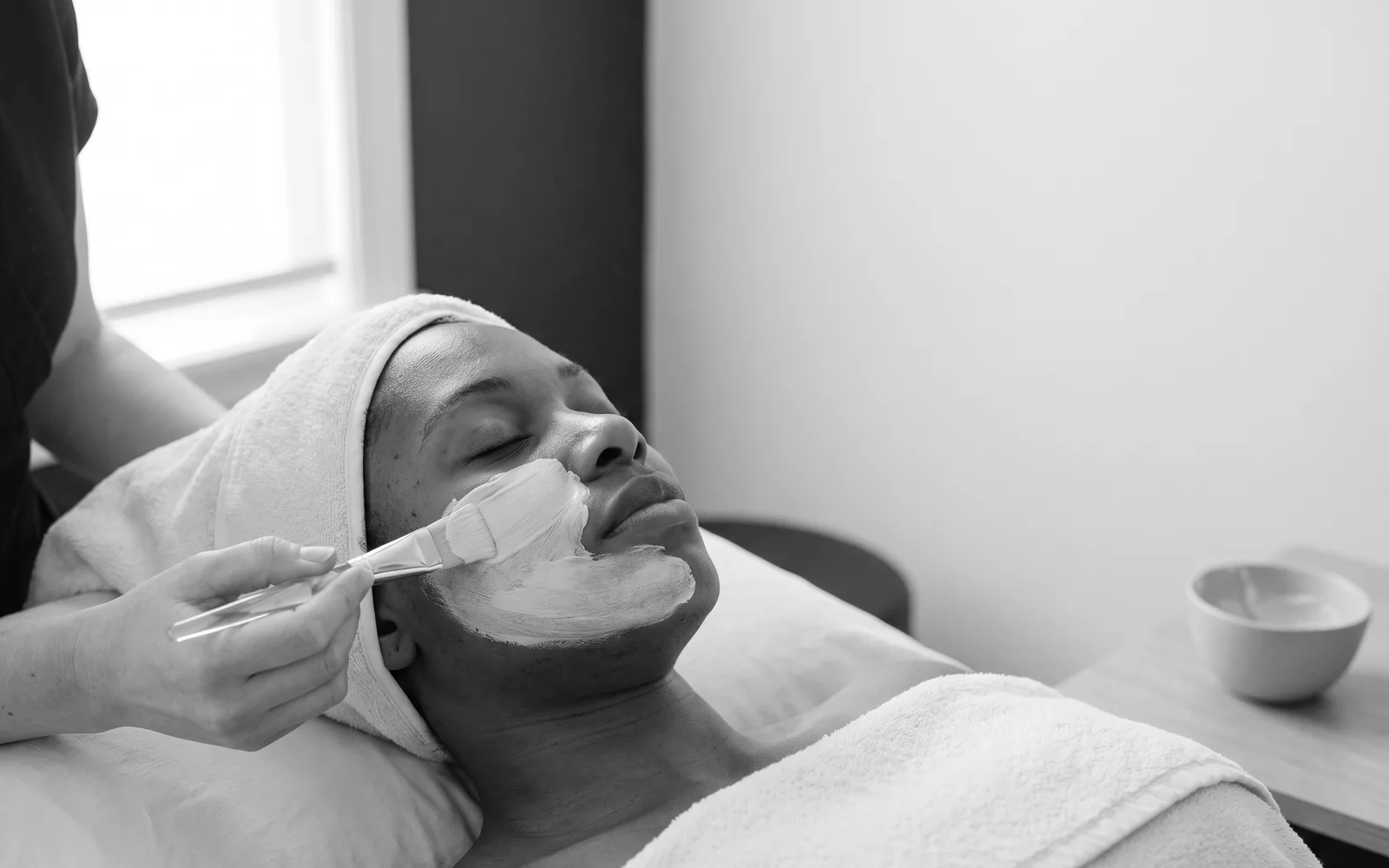
A chemical peel is a professional treatment in which an esthetician applies a carefully timed exfoliating solution to clean skin, then neutralizes and rinses it away. The word "chemical" simply refers to the acid used. It does not mean harsh or aggressive.
Your skin naturally sheds its surface cells all the time, but that process can slow down and leave a dull, uneven layer on top. A gentle peel helps the shedding along. Once the buildup lifts, skin often feels smoother and the products you apply afterward may sit on it more comfortably. Cleveland Clinic describes a light, or "lunchtime," peel, one of the peel depths a dermatologist may choose, as one that removes the outermost layer of skin and provides subtle improvement over time, often in a series, and says it may suit people with uneven skin coloring or dry, rough skin.
What "Gentle" and "Superficial" Mean
A superficial peel works only on the outermost surface of the skin. That is the kind of exfoliation we perform. The American Society for Dermatologic Surgery explains that a superficial peel uses an alpha-hydroxy acid or another mild acid to penetrate only the outer layer of skin and gently exfoliate it, and that it is used to improve the appearance of mild skin discoloration and rough skin. Think of it as a more precise version of a good scrub, with an even, controlled application and an esthetician watching how your skin responds the whole time.
Our menu offers two such add-ons, the gentle lactic peel and the gentle glycolic peel. They suit regular, low-downtime maintenance for clients across Copley and the surrounding Northeast Ohio communities. If you have questions about the gentle options, reach out through our contact page and we will talk through what fits.
Lactic vs. Glycolic: What Is the Difference?
Both lactic acid and glycolic acid belong to the alpha hydroxy family, which is a group of mild exfoliating ingredients. A review published in the journal Molecules describes superficial peels as treatments that penetrate only the outermost layer of the skin (the epidermis). They do a similar job in different ways, so the better choice comes down to your skin and your goals.
The Gentle Lactic Peel
Lactic acid is generally considered the softer of the two. Its molecules are larger, so it tends to work more slowly at the surface, and it is known for leaving skin feeling comfortable and hydrated rather than stripped. The same review notes that lactic acid works by loosening the bonds between dead skin cells on the surface, that it has moisturizing properties that can help hydrate the skin, and that lactic-acid peels may be a good fit for people with sensitive skin.
- Who it often suits: sensitive or easily reddened skin, dry or dehydrated skin, and first-time peel clients.
- What clients commonly notice: a soft, supple, lightly brightened look.
- Why people choose it: it is a gentle introduction that rarely feels like much more than a mild tingle.
Our gentle lactic peel add-on takes 15 minutes.
The Gentle Glycolic Peel
Glycolic acid has smaller molecules, so it works a little more actively at the surface. That is why many people reach for it when they want smoother texture and a more luminous finish. The review describes glycolic acid as the simplest alpha hydroxy acid, with the smallest molecular weight and size, and notes that at low concentrations it produces only superficial exfoliation.
- Who it often suits: normal, combination or oilier skin that tolerates exfoliation well, and anyone who wants a noticeably polished look.
- What clients commonly notice: a brighter, smoother-feeling surface and a more even-looking tone.
- Why people choose it: it is a step up in intensity from lactic while still staying in gentle, surface-level territory.
Our gentle glycolic peel add-on also takes 15 minutes.
Which One Should You Choose?
Use this quick guide, then let your esthetician confirm it after looking at your skin.
- Choose lactic if your skin is dry, reactive, or new to exfoliating treatments, or if you want comfort first.
- Choose glycolic if your skin is resilient and you want extra smoothness and glow.
- Not sure? Start with lactic. You can step up to glycolic at a later visit if your skin handles it well.
The right pick can change with the seasons. Skin that is oily in July may feel tight in January, and your peel can follow it.
What Happens During a Peel Add-On
A peel add-on is booked with your facial, so you do not need a separate appointment. Gentle peel services generally follow steps like these, and your esthetician will guide the details for your visit.
- Step 1: Consultation. Your esthetician asks about your skin, your routine, recent sun exposure and anything that might make your skin more sensitive right now.
- Step 2: Cleanse. Skin is cleansed so the peel can be applied evenly.
- Step 3: Apply. The peel goes on in a thin, even layer. Many clients feel a gentle warmth or light tingle, which usually settles quickly.
- Step 4: Timing. Your esthetician watches your skin closely and keeps the application short. The add-on itself is about 15 minutes.
- Step 5: Neutralize and rinse. The peel is removed so exfoliation stops at the right moment.
- Step 6: Soothe and protect. Hydrating products and sun protection finish the service, and you leave with aftercare guidance.
If anything feels uncomfortable, say so right away. Speaking up is part of how a gentle peel stays gentle.
Peel Add-Ons and the Radiance Reset Facial
If your main goal is brightness and smoother texture, ask about the Radiance Reset Facial, a 60-minute facial that offers a choice of exfoliation method, including a lactic or glycolic peel. You can also see how peels sit alongside the other options in our guide to facial add-ons, and dermaplaning offers a different, blade-based way to smooth the surface.
What to Expect in the Days After
Gentle peels are known for low downtime, but your skin is still freshly exfoliated, so a few things are normal. For peels done in a dermatologist's office, Cleveland Clinic says recovery from a light peel may take anywhere from hours to a few days, with little to no downtime, while the American Academy of Dermatology notes that skin will be red after a refreshing peel and that scaling may develop and last 3 to 7 days. A gentle studio peel is a milder, cosmetic version of the same idea.
The First Day
Skin may look a little pink and feel slightly warm or tight, much like it can after a brisk walk in cold air. Many clients simply feel fresh and smooth.
Days Two to Five
Some people notice light, fine flaking, usually around the nose, chin or the edges of the face. Others notice nothing visible at all. Both are normal, and neither tells you the peel worked better or worse.
What to Do
- Be gentle. Cleanse with a mild cleanser and pat dry.
- Moisturize. Use a plain, comforting moisturizer as often as your skin wants it.
- Wear sunscreen every morning. The American Society for Dermatologic Surgery notes that the new skin is temporarily more sensitive to the sun after a peel and recommends daily use of sunscreen, so a broad-spectrum sunscreen and shade matter.
- Never pick or peel flakes. Let them shed on their own. Picking can leave marks.
- Pause strong actives. Hold off on scrubs, exfoliating acids and similar active products until your esthetician says they are fine to restart.
For a full day-by-day routine, see our post-facial care guide.
When to Call Us or Your Healthcare Provider
Mild redness, tightness and light flaking are expected. If you notice intense burning, swelling, blistering, or redness that is getting worse instead of better, contact your healthcare provider, and let the studio know as well.
How Often Should You Book a Gentle Peel?
Because these peels are light, many clients book them periodically instead of as a one-time event. A common rhythm is every four to six weeks, but the right spacing depends on your skin and how it responds. Because a light peel's effects build gradually, the American Academy of Dermatology notes that, for peels performed by a dermatologist, you may need 3 to 5 refreshing peels to reach the results you want, and that most peel results do not last forever because skin continues to age.
- Seasonal refresh: some clients book once with each change of season.
- Monthly maintenance: others pair a peel with a regular monthly facial.
- Event prep: if you have a wedding or photo shoot coming up, plan your peel a week or two ahead so any light flaking has time to settle.
More is not better. The American Academy of Dermatology cautions that over-exfoliating could lead to red, irritated skin. Over-exfoliated skin can also feel tight and sensitive. If your skin ever feels irritated, we would rather skip a peel and focus on hydration. Consistency, sunscreen and a simple home routine matter more than frequency. Our guide to building a skincare routine shows how the pieces fit together.
Who Should Check With a Healthcare Provider First?
A gentle peel is not right for every person at every moment. Please talk with your healthcare provider before booking if any of the following applies to you:
- You are pregnant or nursing. Ask your healthcare provider whether a peel is appropriate during this time.
- You take isotretinoin or have in the past. This medication changes how skin behaves, so get your healthcare provider's guidance first.
- You use prescription retinoids or other prescription skin products. Ask your healthcare provider how to time them around a peel.
- You have a skin condition such as eczema, rosacea, psoriasis or active breakouts, or any open or irritated skin. Check with your healthcare provider first.
- You have allergies or have reacted to skin products before. Mention this and ask your healthcare provider if needed.
- You have a recent sunburn or very sun-exposed skin. Wait until your skin has calmed down completely.
Cleveland Clinic similarly notes that peels may not be recommended for people with a history of abnormal skin scarring, for people who have skin conditions or take medications that make the skin more sensitive, or for anyone who cannot stay out of the sun during the recovery period. Please tell your esthetician about any of these at booking and again at your visit. This article is general information and cannot replace the advice of the person who knows your health history.
Preparing Without Overdoing It
A little preparation helps. Keep your routine simple, avoid new products and skip sun exposure in the days before your visit. For the complete checklist, our guide on how to prepare for a gentle facial peel covers the week before, the day before and the day of your appointment.
Frequently Asked Questions
Does a gentle chemical peel hurt?
Many clients describe a mild warmth or tingle that often settles quickly. Because lactic and glycolic peels are gentle, they are not meant to be painful. Tell your esthetician if the sensation becomes uncomfortable so they can adjust or stop the peel.
Will my skin visibly peel?
Not necessarily. Gentle peels often cause only light, fine flaking or none at all. Dry or textured areas are more likely to flake, and everyone's skin responds a little differently.
Can I wear makeup after a peel?
Many clients wait until the next day, or at least until any tightness settles, and then use clean tools and light products. If your skin feels sensitive, give it a break and keep things simple.
Is a lactic peel or a glycolic peel better for sensitive skin?
Lactic is usually the more comfortable starting point for sensitive skin. If your skin has a condition or you are unsure how it will react, check with your healthcare provider and tell your esthetician before the peel.
Can I get a peel and other add-ons in the same visit?
Often yes, but it depends on your skin that day. Your esthetician may suggest pairing a peel with a hydrating step and skipping other exfoliating services so your skin is not overworked.
Why Choose a Professional for Your Peel
A gentle peel looks simple, but the details matter, and a trained esthetician brings several things to it.
- A skin assessment first. Your esthetician checks how your skin looks and feels that day and chooses lactic or glycolic accordingly.
- Controlled application and timing. Even coverage and careful timing keep the experience comfortable.
- Sensible pairing. A professional knows which services work well together and which would be too much in one visit.
- Honest guidance. If your skin is not ready, a good esthetician will say so and suggest a calmer alternative.
- Aftercare guidance. Your esthetician can talk through what to use, what to avoid and when to come back.
Book Your Gentle Peel in Copley
Ready for a brighter, smoother-feeling complexion? Explore our facial services and enhancements, then book an appointment and add a gentle lactic or glycolic peel to your facial. We welcome clients from Copley, Fairlawn, Akron and across Summit County, and we are always happy to help you decide before you book.
Results vary from person to person, and this article is general information, not medical advice.
Book your visit
BZ Esthetics Studio is in Copley, Ohio. Every visit is by appointment.
BZ Esthetics Team
Our team of licensed estheticians and beauty professionals share their expertise to help you achieve your beauty goals. Every article is researched, fact-checked, and written with your wellness in mind.