LED Light Therapy: What It Does for Your Skin and What to Expect
LED light therapy uses red and blue light as a gentle skincare step. Learn what research suggests, what a session is like, and who should check first.
LED light therapy is a gentle, noninvasive skin treatment that uses specific colors of visible light, most often red and blue, as a calm addition to a skincare routine. According to Cleveland Clinic, red LED light may reduce inflammation and stimulate the production of collagen, while blue LED light may destroy acne-causing bacteria. Results build gradually over a series of sessions, and they vary from person to person.
At BZ Esthetics Studio in Copley, Ohio, LED light therapy is offered as Celluma Light Therapy, available as a standalone session or as an add-on to a facial. This guide covers what LED light therapy is and what it may do for your skin, what the research does and does not say, what happens during a session step by step, how to care for your skin afterward, and who should check with a healthcare provider first. Whether you live in Copley, Fairlawn, or elsewhere in the Akron area, here is what to know before you book.
What You Need to Know About LED Light Therapy
- It uses visible light, not UV. Cleveland Clinic notes that LED light therapy does not use ultraviolet light and that people with any skin type and color can use it.
- It is not a one-time fix. The American Academy of Dermatology describes red light as something other than a one-and-done treatment, adding that it takes time to see results and that not everyone sees them.
- The evidence is encouraging but still developing. The American Academy of Dermatology calls the research results encouraging but says more research is needed, especially on at-home devices.
- Short-term safety looks reassuring, and long-term data is limited. Cleveland Clinic calls LED light therapy a safe, relatively risk-free treatment, while cautioning that there is less information about its long-term safety.
- Some people should check with a healthcare provider first. Certain medications and skin conditions can increase sensitivity to light, and we cover those details below.
What Is LED Light Therapy?
LED stands for light-emitting diode. In skincare, LED light therapy means resting under a panel of these lights for a set amount of time, with no needles and no peeling. Researchers often use the broader term photobiomodulation. A 2024 review in the International Journal of Molecular Sciences describes photobiomodulation as a procedure that uses light to modulate cellular functions and biological processes, and it notes that standard treatment protocols still need further research.
Each color of light behaves differently in the skin. According to Cleveland Clinic, blue light affects the uppermost layer of skin, red light travels further into the skin, yellow light penetrates deeper, and near-infrared light penetrates deepest. Dermatologists and estheticians use LED light therapy for a range of skin concerns, often alongside facials or topical skincare.
What Does Red Light Do for Skin?
Red light is the color most often discussed for visible signs of aging. The 2024 photobiomodulation review describes laboratory studies in which red and infrared light increased collagen and elastin expression in human fibroblasts, and it reports that red light has shown improvement in wrinkles and signs of photodamage in some studies. The same review cautions that clinical studies are not numerous and that protocols vary, which makes firm conclusions difficult.
In practical terms, the American Academy of Dermatology says some studies indicate that red-light LED devices can produce subtle to noticeable results on the face. That is the honest framing. Think of red light as a steady, supportive step in a broader skincare routine, not as a dramatic overnight change.
What Does Blue Light Do for Skin?
Blue light is most often studied for blemish-prone skin. According to DermNet, acne bacteria release compounds called porphyrins, and when porphyrins absorb certain wavelengths of light, free radical damage is produced that can destroy the bacteria. DermNet notes that several small studies suggest blue light may help acne-prone skin, that further large, controlled studies are needed, and that side effects are generally minor, such as swelling, dryness, and temporary pigment changes in treated areas.
DermNet also notes that blue light may not suit every type of acne: in one study, deep nodulocystic acne lesions worsened with it. If you are managing persistent acne, rosacea, or any other skin condition, talk with your dermatologist or healthcare provider before adding LED sessions. A light session at an esthetics studio is a cosmetic service, not a substitute for medical care.
Why Consider LED Light Therapy?
LED light therapy appeals to people who want a gentle, low-commitment addition to their routine. Here is why it often fits well:
- It is comfortable, with little interruption to your day. Cleveland Clinic describes LED light therapy as noninvasive and painless, notes that you might feel some warmth but no discomfort, and says that besides being careful about sun exposure in the 48 hours after treatment, you can return to your normal routine.
- It pairs naturally with facials. Because Celluma Light Therapy can be booked as an add-on, it can slot into a facial visit you are already planning.
- It is a quiet, restful break. Many clients find that lying back under the lights is a calm, relaxing part of their self-care time.
- It is easy to make consistent. Sessions are straightforward to schedule, which helps when the goal is a steady series rather than a single visit.
How LED Light Therapy Works: Step by Step
A typical professional LED session is simple. Here is what to expect:
- Step 1: Consultation. Your esthetician asks about your skin goals, your current skincare products, any medications, and your health history to confirm that LED light therapy is a good fit. Be candid about anything that makes your skin sensitive to light.
- Step 2: Cleanse. Your skin is cleansed so that makeup, sunscreen, and oil are removed before the light session begins.
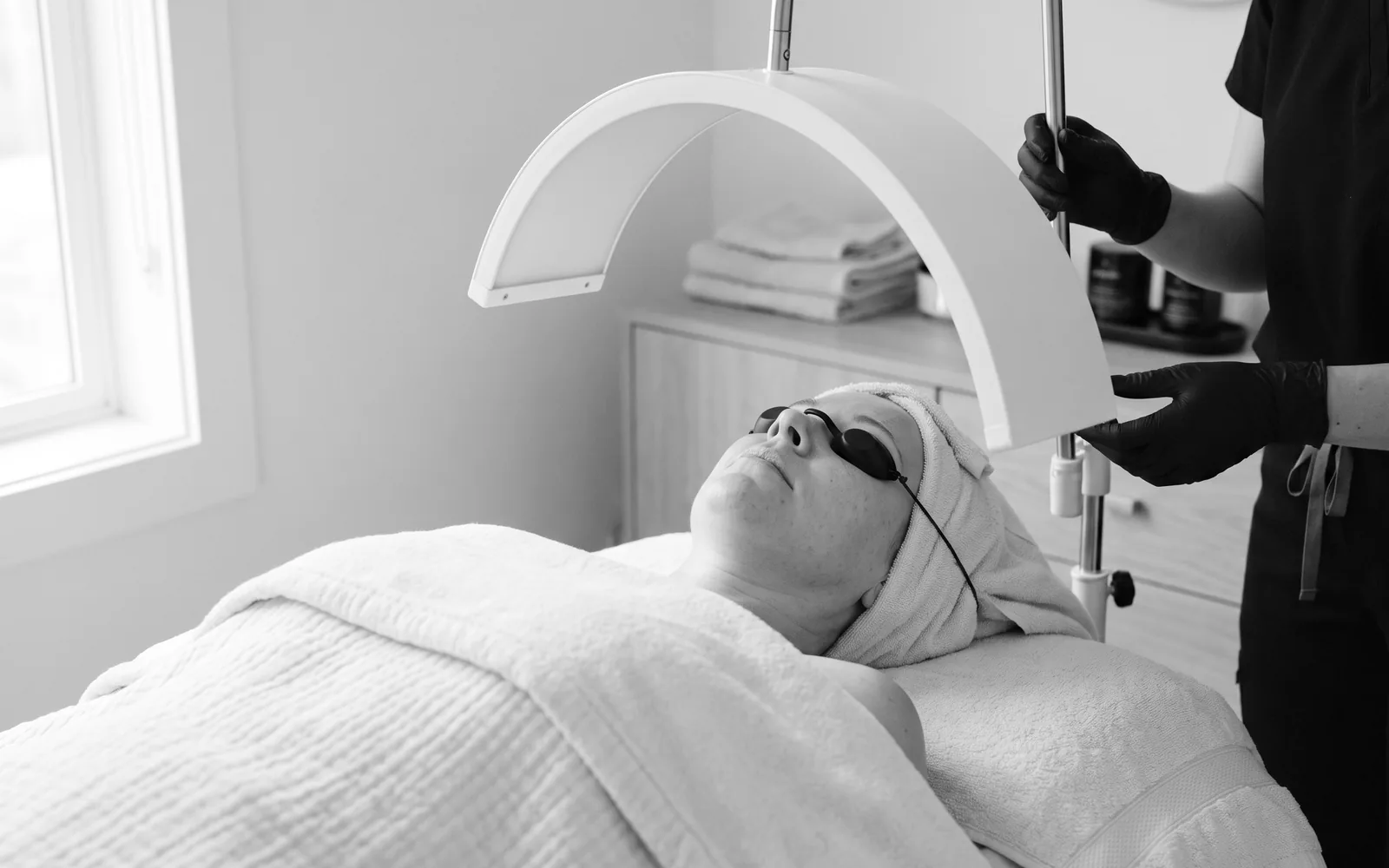
- Step 3: Protect your eyes. You wear protective eyewear for the entire session. Cleveland Clinic recommends safety goggles to protect your eyes from the bright lights.
- Step 4: Relax under the light. The device is positioned near the treatment area while you rest. Cleveland Clinic notes that an in-office treatment usually lasts about 20 minutes, and your esthetician will let you know the timing for your visit.
- Step 5: Finish and protect. If LED is an add-on, your facial continues or wraps up with finishing products. Before you head out, apply sunscreen.
How Many LED Sessions Will You Need?
Consistency matters more than any single visit. According to Cleveland Clinic, seeing significant benefits typically takes a series of in-office treatments, often one each week for about a month, followed by maintenance treatments every month or every few months. Cleveland Clinic also notes that in-office LED light therapy uses more powerful strengths than at-home devices.
Your esthetician can help you map out a schedule that matches your goals, your calendar, and the other services you enjoy, whether that means a monthly facial with a light add-on or standalone light sessions between facials.
How to Care for Your Skin After LED Light Therapy
Aftercare is simple, but it matters:
- Be sun smart. Cleveland Clinic advises being careful about sun exposure in the 48 hours after treatment and applying extra sunscreen.
- Keep your routine gentle. Stick with your usual gentle cleanser and moisturizer for the rest of the day, and save new or strong products for another time unless your esthetician suggests otherwise.
- Stay consistent. Book your next session before you leave so that your series stays on track.
- Watch and report. Side effects are rare, but Cleveland Clinic lists possible effects such as increased inflammation, rash, redness, and pain. If you notice anything unusual, contact your healthcare provider.
Common Mistakes to Avoid With LED Light Therapy
- Expecting results after one visit. Results are gradual and vary, so plan a series rather than a single session.
- Skipping eye protection at home. If you also use a home device, the American Academy of Dermatology advises wearing the eye protection the directions recommend and not substituting sunglasses for protective goggles.
- Leaving out your medications. Tell your esthetician about everything you take, including topical prescriptions, so that your session can be planned safely.
- Using LED to self-diagnose. Cleveland Clinic points out that what looks like aging or blemished skin may actually be skin cancer, so have a dermatologist check any new, changing, or unusual spot before addressing it cosmetically.
- Assuming every device is the same. The American Academy of Dermatology notes that an FDA-cleared label does not tell you anything about how effective a home device is.
Who Should Check With a Healthcare Provider First?
LED light therapy is not right for everyone. Cleveland Clinic says it is not appropriate for people who take certain medications that increase sensitivity to sunlight, such as isotretinoin and lithium, or who have a history of certain conditions, including skin cancer and inherited eye diseases. The American Academy of Dermatology adds that a skin condition that makes you sensitive to light, such as lupus, can worsen with red light exposure, and that people with darker skin tones are more sensitive to visible light than people with lighter skin tones.
If any of these apply to you, or if you are pregnant, nursing, starting a new medication, or managing a skin condition, please consult your healthcare provider before booking. Sharing your full health history at your appointment helps your esthetician recommend the right service for you.
When to Book LED Light Therapy
Timing makes a difference:
- Several weeks before an event. Because results build over a series, start well ahead of a wedding, reunion, or photo day rather than booking a single session the day before.
- Alongside your facial. Adding Celluma Light Therapy to a facial is an easy way to fit LED into a visit you already have on the calendar.
- As ongoing maintenance. Once you complete an initial series, a regular maintenance rhythm keeps LED part of your routine.
- After checking on new medications. If you have started a medication or topical that may make you light sensitive, check with your healthcare provider before your next session.
Pairing LED Light Therapy With Other BZ Services
At our Copley studio, Celluma Light Therapy can be booked on its own or as an add-on, and your esthetician can suggest which facial to pair it with, from the BZ Glow Express to the Clear & Calm Facial, Radiance Reset Facial, The Quench Facial, Lift & Sculpt Facial, or The BZ Red Carpet Facial. Your esthetician can also talk with you about enhancements such as Dermaplaning, a Gentle Lactic Peel or Gentle Glycolic Peel, Eye Rejuvenation, or a Neck & Decollete Treatment, and help you decide what to combine and what to space apart.
You can also plan a fuller visit around your skin appointment. Options include a lash fill for your Classic, Hybrid, or True Volume set, a Lash Lift, Brow Lamination + Tint, Henna Brows, or a Body Contouring session.
Frequently Asked Questions
Does LED light therapy hurt?
Most people find it comfortable. Cleveland Clinic describes LED light therapy as painless and notes that you might feel some warmth but no discomfort. You will wear eye protection because the lights are bright.
How soon will I see results from LED light therapy?
Results are gradual and vary from person to person. The American Academy of Dermatology notes that it takes time to see results and that not everyone sees them, which is why a series of sessions is the usual approach.
Is LED light therapy safe for all skin types?
Cleveland Clinic says people with any skin type and color can use LED light therapy. The American Academy of Dermatology notes that people with darker skin tones are more sensitive to visible light, so share your skin history with your esthetician, and if you have a skin condition or take medication, consult your healthcare provider first.
Is a professional LED session different from an at-home LED mask?
Yes. Cleveland Clinic notes that in-office LED light therapy uses more powerful strengths than at-home devices, and that at-home devices are less likely to deliver dramatic results. A home device can complement professional sessions, but always follow its directions and eye-protection guidance.
Why Choose a Professional LED Session?
- A real consultation. Your esthetician reviews your skin, products, and health history before any light session.
- Proper eye protection and setup. Goggles, positioning, and timing are handled for you.
- A plan, not a guess. You get help building a series and a maintenance schedule that fits your goals.
- A complete skin visit. LED can be combined with a facial and enhancements in a single appointment.
- Local and convenient. Clients in Copley, Fairlawn, Akron, and across Summit County can get professional LED light therapy locally, close to home and work.
Book Your LED Light Therapy Appointment in Copley, Ohio
BZ Esthetics Studio is a luxury esthetics studio in Copley, Ohio, serving Northeast Ohio clients from Fairlawn, Akron, and communities across Summit County. If you have been searching for LED light therapy in your area, we would love to help you decide whether Celluma Light Therapy, a facial, or a combination of both fits your goals. Book your appointment online and choose Celluma Light Therapy as a standalone session or add it to your next facial.
Results vary from person to person, and this article is general information, not medical advice.
Book your visit
BZ Esthetics Studio is in Copley, Ohio. Every visit is by appointment.
BZ Esthetics Team
Our team of licensed estheticians and beauty professionals share their expertise to help you achieve your beauty goals. Every article is researched, fact-checked, and written with your wellness in mind.