How to Prepare for a Facial Peel: A Gentle Lactic and Glycolic Peel Guide
Getting ready for a gentle lactic or glycolic peel? Here is what to do the week before, the day before, the day of and in the first days after.
If you are wondering how to prepare for a facial peel, the short answer is this: pause retinol and strong exfoliants several days ahead, protect your skin from the sun, arrive with calm skin that is free of sunburn or irritation, and treat your skin gently for the first few days afterward. With a gentle lactic or glycolic peel, preparation is less about a long countdown and more about not stacking irritation on either side of your appointment.
At BZ Esthetics Studio in Copley, Ohio, our peels are gentle lactic and glycolic add-ons, not the stronger peels performed in a medical setting. This guide covers the week before, the day before, the day of and the days after, lactic versus glycolic in plain terms, and who should talk with a healthcare provider before booking. For a broader look at how different peel types compare, read Chemical Peels Explained: Types, Benefits, and What to Expect.
What You Need to Know Before a Gentle Facial Peel
- Our peels are gentle by design. The studio offers a Gentle Lactic Peel and a Gentle Glycolic Peel, each a 15-minute add-on from our Enhancements menu. We do not offer stronger peels.
- Start about a week ahead. Pause retinol, scrubs, acid toners and peel pads for several days beforehand, and protect your skin from the sun.
- Reschedule if your skin is compromised. Sunburned, windburned, broken or irritated skin means moving your appointment.
- Some clients need a healthcare provider's input first. That includes anyone who is pregnant or breastfeeding, using prescription skincare, taking isotretinoin now or in the recent past, or managing an active skin condition.
- Aftercare is simple. A gentle cleanser, a moisturizer and daily sunscreen, with no exfoliants for several days.
- Expect subtle, gradual results. Many clients notice smoother, brighter-looking skin, and results vary from person to person.
Lactic vs. Glycolic Peels: What Is the Difference?
Lactic acid and glycolic acid are both alpha hydroxy acids, often shortened to AHAs. In cosmetic terms, AHAs help loosen the dull, dead cells on the skin's surface so they shed more evenly, which is why skin can look brighter and feel smoother afterward. The dermatology reference DermNet explains that alpha hydroxy acids encourage the shedding of old surface skin cells, loosening the substances that hold them together so the dead skin can come away gently. The two differ mainly in how gently and gradually they work.
What Is a Lactic Peel?
Lactic acid is the AHA traditionally associated with milk. It has a larger molecule than glycolic acid, so it tends to work more gradually on the surface of the skin. It is also known for a hydrating, comfortable feel, which is why many estheticians reach for it with first-time peel clients, drier skin and skin that leans sensitive. If your skin feels tight and dull during a Northeast Ohio winter, a lactic peel is often a soft place to start.
What Is a Glycolic Peel?
Glycolic acid, found naturally in sugar cane, has the smallest molecule of the common AHAs, and a published review of glycolic acid peels notes that it penetrates skin easily, which is part of why it is a popular peel ingredient. That small size lets it work more readily, so a glycolic peel may feel a little more tingly than a lactic peel. Cleveland Clinic adds that glycolic acid can increase your sensitivity to the sun, and that people with sensitive skin may find it more irritating. Glycolic is a popular choice for skin that already tolerates exfoliation well and for clients focused on smoother-feeling texture and a brighter-looking surface.
How to Choose Between Lactic and Glycolic
You do not have to decide alone. Share your skin history and current routine with your esthetician, and let them recommend one after seeing your skin in person. As a general guide:
- Consider lactic if this is your first peel, your skin runs dry or reacts easily, or you mainly want a soft, hydrated glow.
- Consider glycolic if you have had gentle peels before without irritation, your skin is resilient or oily, or you mainly want smoother-feeling texture.
- Let the day decide. If your skin is more reactive than usual on appointment day, the gentler option, or skipping the peel that visit, may be the right call.
How to Prepare for a Facial Peel: The Week Before
Time Your Peel Around Events
Give yourself a cushion before anything important. Many clients leave about a week between a peel and a wedding, photo session or big trip, so any pinkness or light flaking can settle. Avoid booking a peel the day before an event, even a gentle one.
Pause Retinol and Strong Actives
Over-the-counter retinol and similar products can make skin more reactive to a peel. A common approach is to pause them for about five to seven days beforehand, though your esthetician may suggest a different window. For comparison, Cleveland Clinic advises against using products containing retinoids one to two weeks before a chemical peel unless your physician tells you differently. Leave out acid toners, peel pads and scrubs for the last several days as well.
Prescription retinoids are different. Do not stop or change a prescription on your own. Ask the healthcare provider who prescribed it whether a peel is appropriate for you and how to time it, then share that guidance with your esthetician.
Protect Your Skin From the Sun
Sunburned or freshly tanned skin should not receive a peel. Cleveland Clinic suggests avoiding tanning and direct sun exposure for two weeks before a chemical peel. In the week before your appointment, wear a broad-spectrum sunscreen of SPF 30 or higher every day, add a hat when you are outdoors and skip tanning beds entirely. Hold off on self-tanner on your face as well, since a peel can lift it unevenly.
Fall and winter are often called peel season because sun exposure tends to be lower, but around Copley and Fairlawn sunscreen still matters on cool, cloudy days.
Plan Facial Waxing and Dermaplaning Around Your Peel
Hair removal and a peel both ask something of your skin, so space them out. If you are due for facial waxing on your brows, upper lip, chin or nose, many estheticians suggest scheduling it at least a few days before your peel or waiting about a week after. Skip at-home dermaplaning tools in the days leading up, too.
Professional dermaplaning is a separate exfoliating service on our menu, and whether it is paired with a peel in the same visit is your esthetician's call after assessing your skin. Our complete guide to dermaplaning explains how it works.
Keep Your Routine Simple and Hydrated
The goal this week is a calm, comfortable skin barrier: a gentle cleanser, a moisturizer your skin already tolerates and a hydrating serum if you use one. Skip new products, since a surprise reaction right before your appointment could mean rescheduling.
What to Do the Day Before a Facial Peel
The day before is about restraint: keep your routine to the basics.
- Skip every exfoliant. No scrubs, acid toners, peel pads, cleansing brushes or exfoliating spot treatments.
- Skip waxing and tweezing. Freshly waxed or tweezed areas can sting when the peel solution touches them.
- Shave the day before, not the morning of. If you shave your face, doing it a day ahead gives tiny nicks time to settle.
- Do a quick skin check. Look for sunburn, a cold sore, a rash, open blemishes or new irritation. If you spot any of these, contact us to reschedule, and check with your healthcare provider about anything that concerns you.
- Note any changes. If you have started a new product or medication since booking, write it down so you can mention it, and ask your healthcare provider about anything prescribed.
The Day of Your Gentle Peel: What to Expect
Before You Arrive
Come with clean skin or light makeup that is easy to remove. Be ready to share everything you have used on your face in the past week, including anything your healthcare provider has prescribed, and bring a hat if you will be outdoors afterward.
During the Appointment
A gentle peel add-on generally follows a simple rhythm:
- Step 1: Skin check and conversation. Expect to talk through your routine, recent sun exposure and any health changes before anything touches your skin.
- Step 2: Cleanse and prep. Your skin is cleansed so the peel can go on evenly.
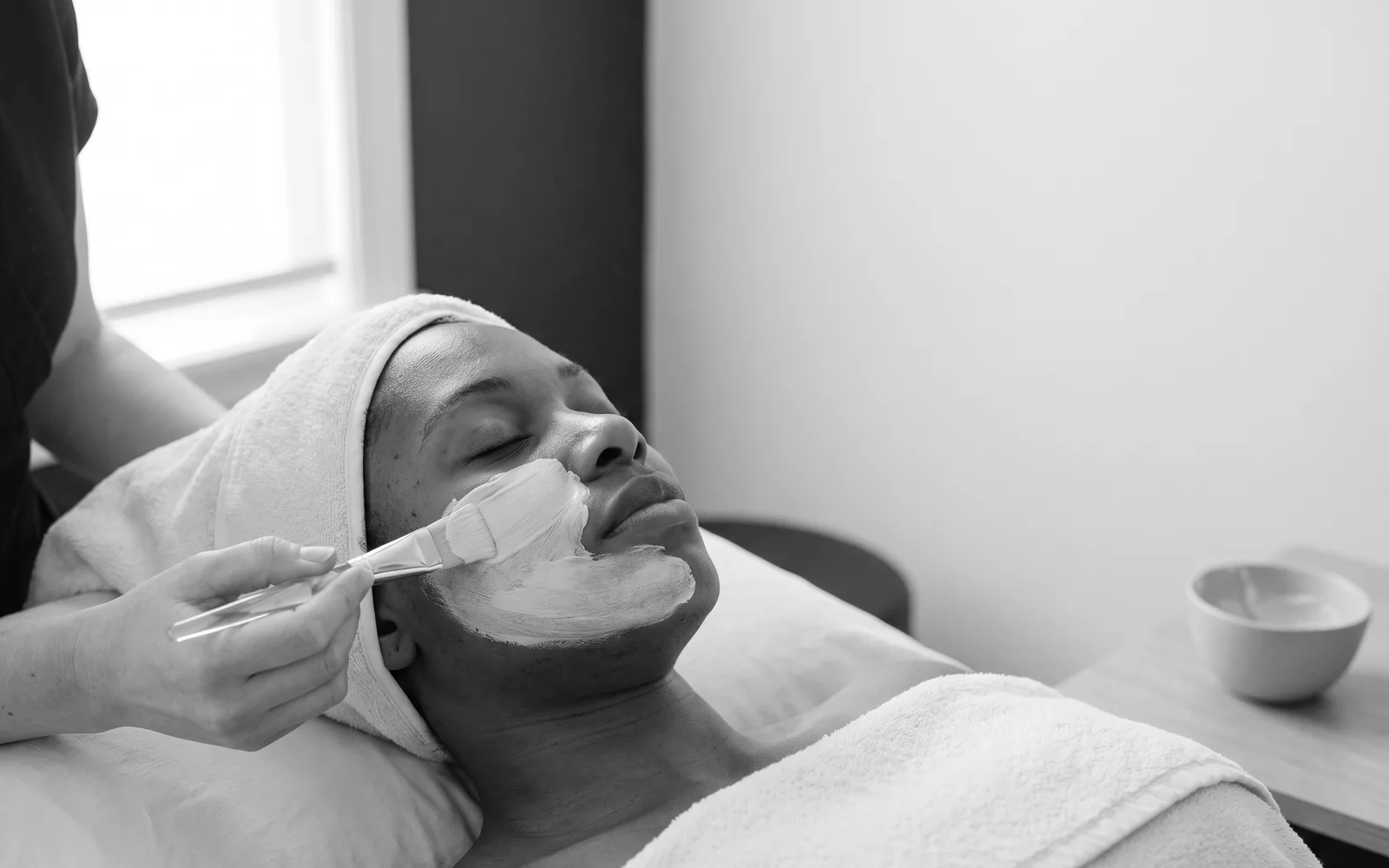
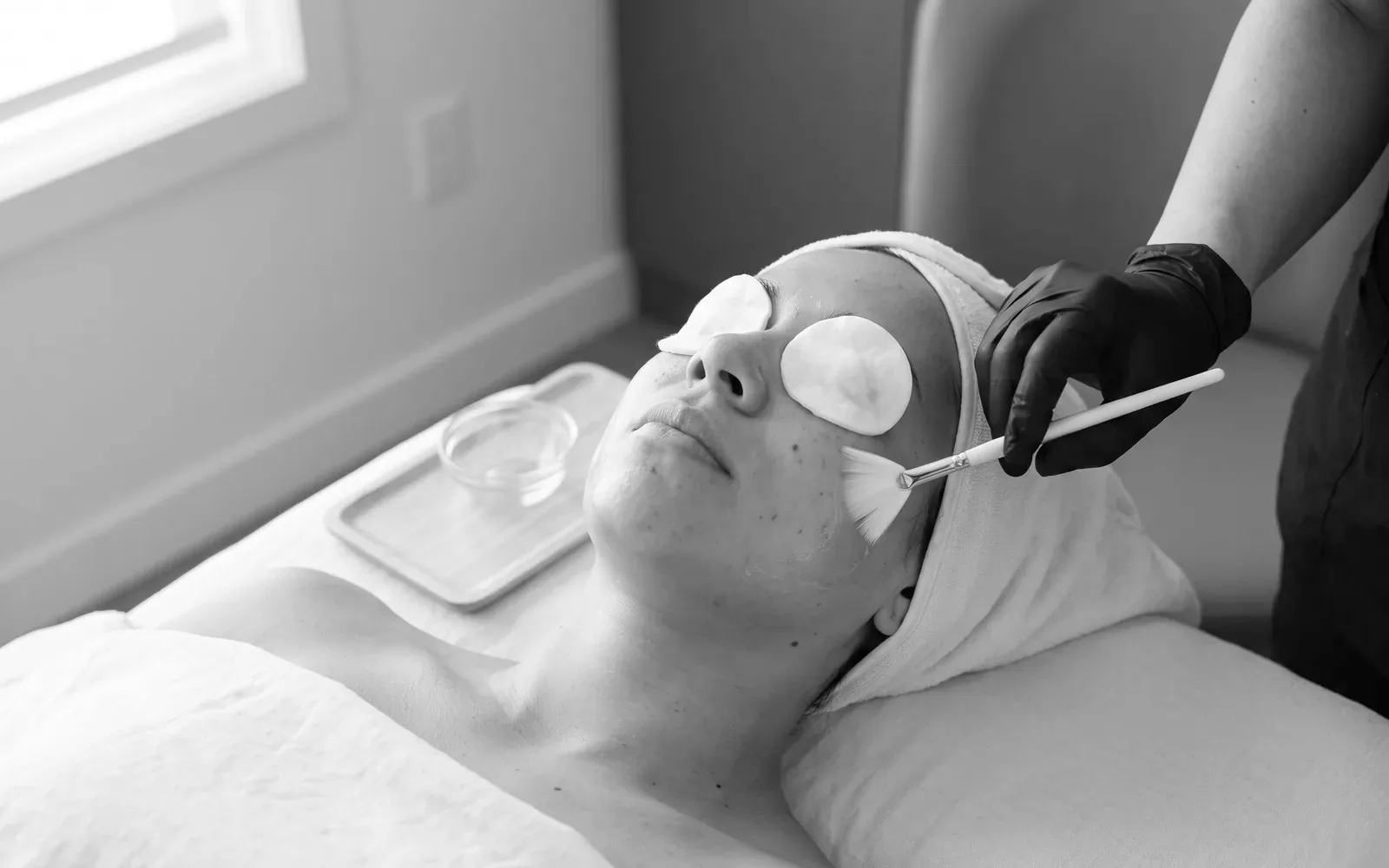
- Step 3: Application. The lactic or glycolic solution is applied in a thin, even layer, keeping clear of delicate areas such as the corners of the eyes, the nostrils and the lips.
- Step 4: Removal. After a short time, the solution is removed or neutralized according to the product's directions.
- Step 5: Calm and protect. Soothing products and sunscreen finish the service.
How a Gentle Peel Feels
Many clients describe a light tingling, warmth or mild itch while the solution is on the skin, and that sensation usually eases soon after the peel is removed. Speak up right away if anything feels hot, sharp or uncomfortable so your esthetician can adjust or remove the peel. A gentle peel should feel manageable, never like something you have to endure.
What to Do After a Gentle Facial Peel
The First 24 Hours
Your skin may look slightly pink and feel a little tight or warm for a few hours. To keep it comfortable:
- Skip makeup for the rest of the day if you can.
- Wash with lukewarm water and a gentle cleanser, then pat dry.
- Avoid hot yoga, saunas, steam rooms and workouts that make you sweat heavily.
- Keep your hands off your face, and sleep on a clean pillowcase.
Days Two Through Seven
Many clients see little or no visible peeling; for comparison, the American Academy of Dermatology describes the downtime for a light, lunchtime-style peel performed by a dermatologist as typically 1 to 7 days, with lotion or cream and daily sunscreen afterward, and a gentle studio add-on is a milder, cosmetic version of the same technique. Some notice light flaking or dryness for a few days, often around the mouth and nose. Let it shed on its own schedule.
- Moisturize generously and reapply whenever your skin feels dry.
- Wear sunscreen every day, since freshly exfoliated skin may be more sensitive to the sun, even when the sky looks gray. Cleveland Clinic also advises against tanning beds and other tanning while skin recovers.
- Hold off on exfoliants and retinol for about a week, or until your skin feels completely calm. Restart prescription products only as your healthcare provider directs.
- Wait about a week before facial waxing on the treated area.
Common Mistakes to Avoid
- Picking or pulling at flakes, which can leave marks.
- Scrubbing to speed up flaking.
- Booking another exfoliating treatment, at home or elsewhere, before your skin has settled.
Who Should Check With a Healthcare Provider First
A gentle peel is a cosmetic service, and some situations call for medical guidance before any exfoliating treatment. Talk with your healthcare provider before booking if any of the following applies to you:
- You are pregnant, trying to conceive or breastfeeding.
- You take isotretinoin or have taken it recently. Many estheticians ask clients to wait at least six months after the last dose, and your healthcare provider should confirm when your skin is ready.
- You use prescription retinoids or other prescription skincare.
- You take a medication that can make skin more sensitive to the sun, such as certain antibiotics.
- You have an active skin condition such as rosacea, eczema, psoriasis or inflamed acne, or you are prone to cold sores.
- You have a recent sunburn, especially one that blistered or is still peeling.
- You have had a recent cosmetic procedure performed by a medical provider.
Once your provider gives you the go-ahead, share their guidance with your esthetician. Honest answers help your esthetician choose between lactic and glycolic, or suggest a different service for now.
Frequently Asked Questions
How far in advance should I stop retinol before a facial peel?
Many estheticians suggest pausing over-the-counter retinol about five to seven days before a gentle peel and for about a week afterward. If your retinoid is prescribed, ask your healthcare provider before pausing or restarting it.
Will my skin actually peel after a lactic or glycolic peel?
Often, not much, though it can vary with the person and the product. Many clients see little or no visible peeling after a gentle peel, while others notice light flaking or dryness for a few days. Either response is normal, and neither one tells you whether the peel was worthwhile.
Can I wear makeup after a gentle facial peel?
It is a good idea to skip makeup for the rest of the day so your skin can settle. From the next day, light makeup is usually fine if your skin feels comfortable. Apply it over sunscreen with clean brushes or sponges.
Can I get a gentle peel while pregnant?
Check with your healthcare provider before booking any peel during pregnancy or while breastfeeding. Your provider knows your health history and can tell you whether an exfoliating treatment is appropriate right now.
How often can I get a gentle facial peel?
Many clients space gentle peels a few weeks apart, and Cleveland Clinic notes that a light peel done with a dermatologist provides subtle improvement over time and is often done in a series. Results from a gentle studio peel are typically gradual rather than dramatic, but the right rhythm depends on your skin, your routine and the season. Your esthetician can suggest a schedule after seeing how your skin responds to your first peel.
Why Choose a Professional for Your Facial Peel
At-home acid products have their place, but a professional peel adds a trained eye on your skin before, during and after the service.
- A real skin assessment. A trained esthetician can spot sunburn, irritation or sensitivity you might miss.
- Careful application. The peel goes on evenly, stays away from delicate areas and comes off at the right time.
- Guidance that fits your routine. You leave knowing what to pause, what to use and when to restart your usual products.
- A plan that builds over time. Your esthetician can suggest pairing a peel with one of our facials, such as the Radiance Reset Facial for brightening and texture refinement or The Quench Facial for hydration.
Book Your Gentle Facial Peel in Copley
Whether you are getting ready for your first gentle peel or coming back for another, we would love to help you prepare with confidence. BZ Esthetics Studio is in Copley, Ohio, and welcomes clients from Fairlawn, Akron and across Summit County.
When you are ready, book a Gentle Lactic Peel or book a Gentle Glycolic Peel, or book an appointment and we will help you choose the right fit. If you have questions about your medications or skin history, check with your healthcare provider first, then reach out to us with anything else.
Results vary from person to person, and this article is general information, not medical advice.
Book in Fairlawn
BZ Esthetics Studio is in Copley, about 10 minutes from Fairlawn. Every visit is by appointment.
BZ Esthetics Team
Our team of licensed estheticians and beauty professionals share their expertise to help you achieve your beauty goals. Every article is researched, fact-checked, and written with your wellness in mind.