Facial Waxing for Sensitive Skin: Prep, Process and Aftercare
How to prep for facial waxing with sensitive skin: when to pause retinoids, what happens step by step, and aftercare for brow, lip and chin waxing.
Facial waxing for sensitive skin can be a comfortable, routine part of your grooming when the timing, preparation and technique are right. The direct answer: wax only clean, calm, unbroken skin, pause retinoids and certain medications for the window your prescriber recommends, and let a trained esthetician handle your brow waxing, upper lip wax and chin wax with clean, single-use tools. According to the American Academy of Dermatology, newly waxed skin can be red and irritated for a short while, so a little pinkness right after your appointment is expected, while irritation that lingers is a reason to check in with a professional.
At BZ Esthetics Studio in Copley, Ohio, we approach every facial wax with sensitive skin in mind, serving Northeast Ohio clients from Fairlawn, Akron and across Summit County. Below, we cover what makes skin react, when to postpone, how to prepare, what happens step by step and how to care for your skin afterward.
What You Need to Know About Facial Waxing for Sensitive Skin
- Waxing removes hair from below the surface. DermNet describes waxing as a method that removes the entire hair shaft from below the skin's surface, and notes that it may take two to three weeks for hair to regrow.
- Brief redness is common; lasting redness is not. The American Academy of Dermatology's waxing guide advises seeing a board-certified dermatologist if redness or swelling lasts more than two days after waxing.
- Some medications change the plan. The AAD advises against waxing if you are taking isotretinoin or took it within the past six months, are using an antibiotic, or are applying tretinoin, because these medications thin the skin and it could tear when the wax comes off. Always check with your healthcare provider about your own prescriptions.
- Skin should be calm and intact. DermNet states that waxing should not be performed on skin that is irritated, sunburned or broken.
- Hygiene is not optional. The AAD notes that estheticians should apply hot wax with wooden sticks and use an unused stick each time they dip into the wax, since double dipping can transfer germs from one client to the next.
- Our facial waxing menu is focused. BZ Esthetics Studio offers Brows Wax, Upper Lip Wax, Chin Wax and Nose Wax. We offer facial waxing only.
What Is Facial Waxing?
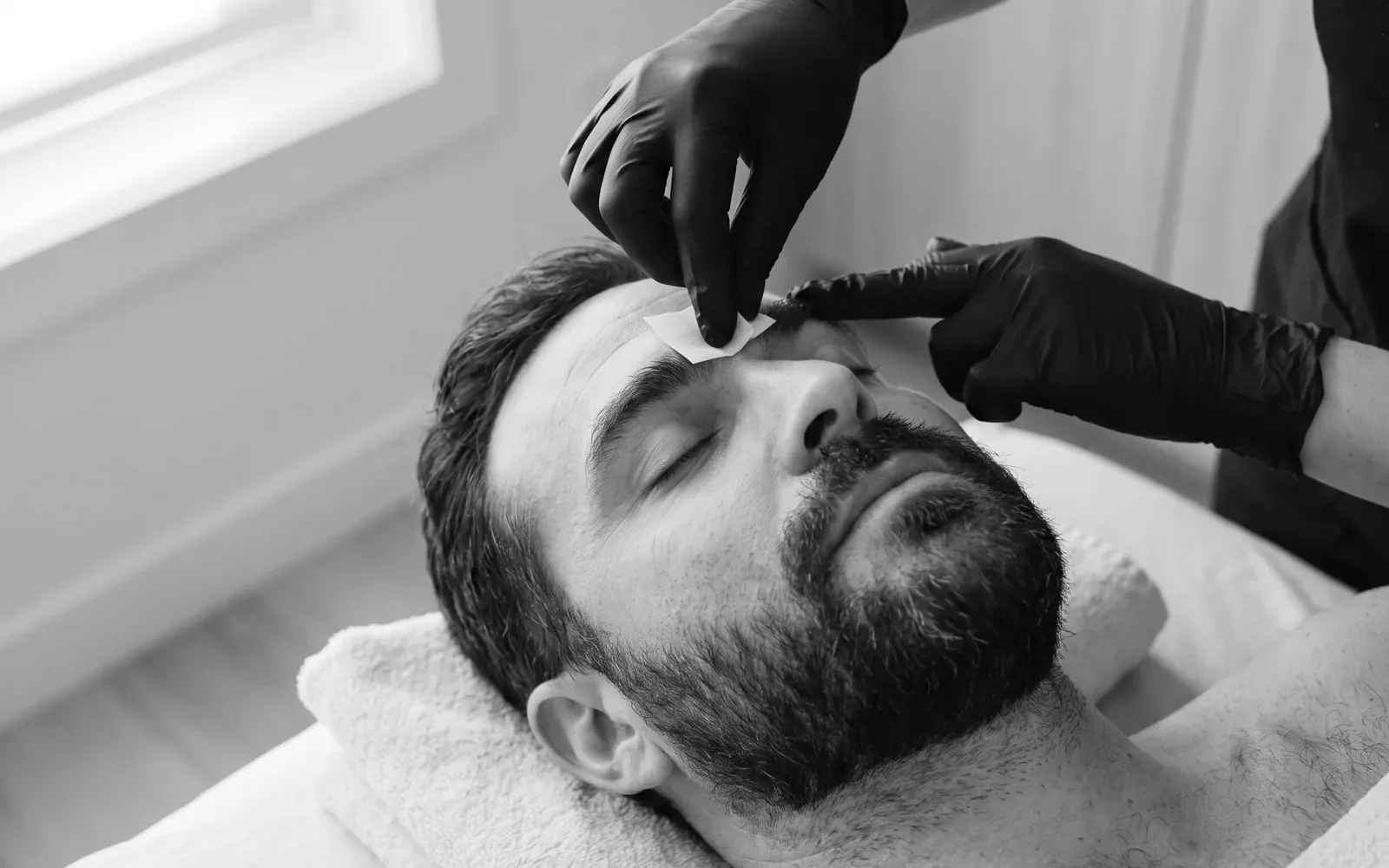
Facial waxing is a hair removal method in which warm wax is spread over a small area of the face and then lifted away, taking unwanted hair with it. The American Academy of Dermatology describes spreading wax in the direction of hair growth, holding the skin taut and removing the wax quickly in the opposite direction. On the face, technique, wax temperature and the condition of your skin that day all matter.
At our Copley studio, facial waxing covers four focused services:
- Brows Wax for cleaning up stray hairs around the brow line.
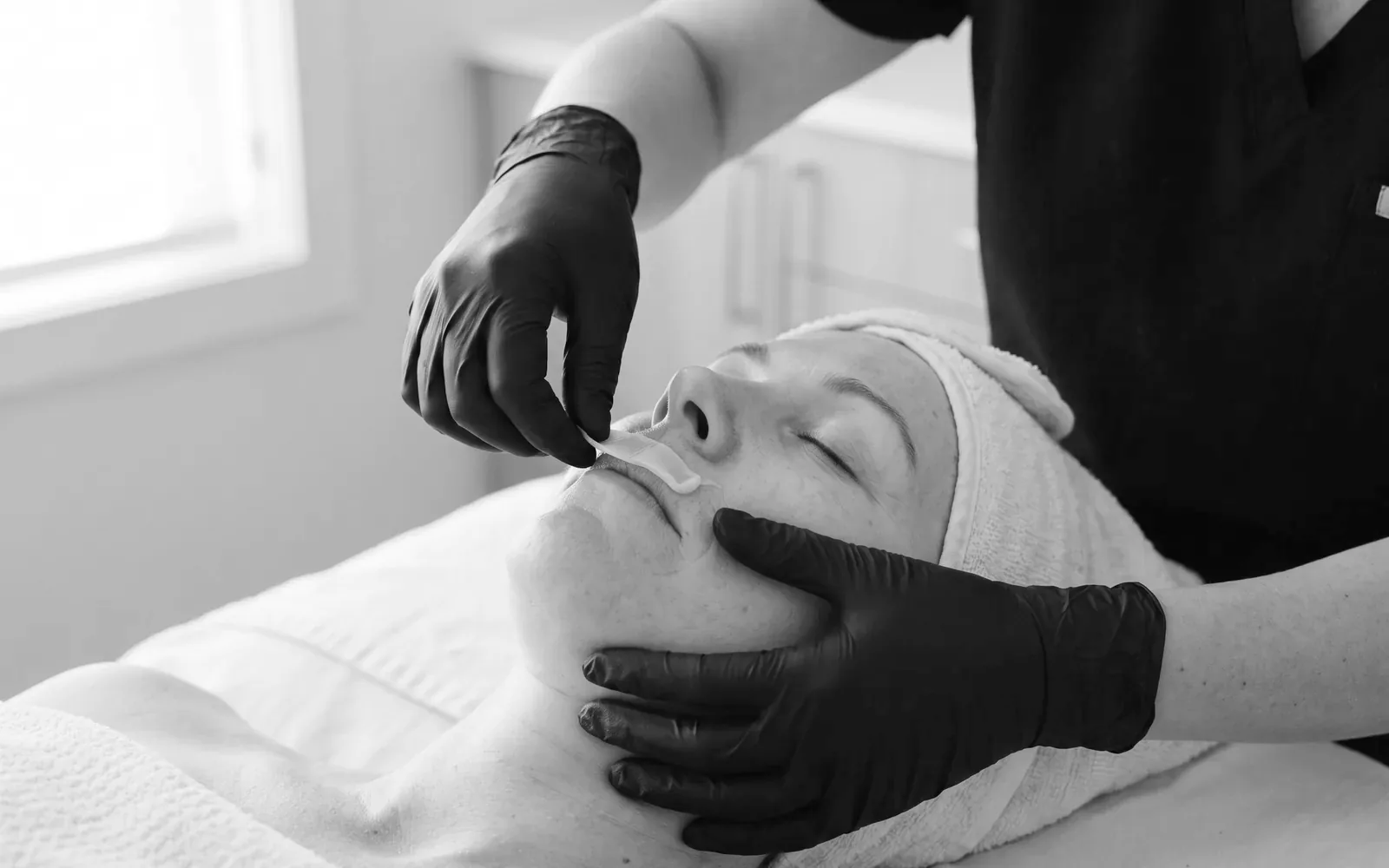
- Upper Lip Wax for fine or darker hair above the lip.
- Chin Wax for hair on and around the chin.
- Nose Wax for a tidier look around the nose.
If you want more than a cleanup, our brow services, including Brow Shaping, Brow Tint, Henna Brows, Brow Lamination + Tint and Total Brows, can be paired with a wax so your brows look finished and balanced.
Why Can Facial Waxing Irritate Sensitive Skin?
Waxing pulls hair from the follicle, and that process can leave skin temporarily reactive. Cleveland Clinic notes that waxing can cause inflamed hair follicles, pain, redness, ingrown hairs and skin irritation, and that in some cases it can lead to folliculitis, an infection that causes red, itchy bumps. The same source points out a small risk of scabs or infection when removing facial hair with wax.
The wax itself can matter, too. DermNet lists contact allergic dermatitis due to rosin among the possible side effects of waxing, along with folliculitis, ingrown hairs, hyperpigmentation and scarring, and notes that the pain people feel depends on each person's pain threshold. If you have reacted to wax before, tell your esthetician, and if you have a known skin condition or allergy, check with your healthcare provider before booking.
What Does Sensitive Skin Look Like Before a Wax?
Sensitive skin is not one single thing. For waxing purposes, it usually describes skin that:
- Stings or flushes when you try a new product
- Reacts to fragrance or strong active ingredients
- Has been recently exfoliated, peeled or professionally treated
- Feels dry, tight or windburned after a cold Northeast Ohio week
If your sensitivity comes from a diagnosed condition such as eczema, rosacea or acne, talk with your healthcare provider before scheduling any facial waxing.
When Should You Postpone Brow Waxing or an Upper Lip Wax?
Consider rescheduling if any of the following apply, and check with your healthcare provider whenever medications or skin conditions are involved.
- You use a topical retinoid or retinol. Guidance varies. The American Academy of Dermatology suggests stopping retinol and prescription retinoids two to five days before waxing your face, while DermNet suggests stopping topical retinoids three to four weeks before waxing to avoid skin injury and soreness. Ask your prescriber which window fits you, and tell your esthetician what you use.
- You have taken isotretinoin. The AAD says not to wax if you have taken isotretinoin in the last six months. DermNet's guidance for oral retinoids is longer, at least six months to one year. Your healthcare provider can tell you what applies to you.
- You are on an antibiotic or tretinoin. The AAD lists both among medications that can thin the skin enough to make waxing a poor choice. Check with your healthcare provider before booking.
- Your skin is sunburned, irritated or broken. We would rather reschedule than wax skin that is not ready, so wait until the area has fully settled.
- You have an inflamed breakout, a mole or a new piercing in the area. Cleveland Clinic recommends skipping hair removal around inflamed acne or pimples, piercings that are not yet settled, and areas with moles or warts. If you are managing acne or have a mole that concerns you, check with your healthcare provider first.
- You recently had folliculitis. When hair removal causes folliculitis, the AAD advises stopping those practices for 30 days. Your healthcare provider can guide you on when it is reasonable to resume.
- You are pregnant or starting a new medication. Check with your healthcare provider before booking, and let us know so we can plan around your needs.
How to Prepare for a Facial Wax
- Step 1: Let the hair grow. The American Academy of Dermatology suggests hair about one-fourth to three-fourths of an inch long for waxing. For brows, try to put the tweezers down between visits so your esthetician has enough hair to shape.
- Step 2: Pause active ingredients. Follow your prescriber's retinoid timing, and skip scrubs and at-home peels on the area before your visit.
- Step 3: Arrive with clean skin. The AAD notes that clean, dry skin allows the wax to adhere properly. If you can, come without makeup on the area you are having waxed.
- Step 4: Plan for comfort. The AAD's waxing guide mentions that cold packs applied about 30 minutes before waxing may help with discomfort. If you are thinking about taking a pain reliever beforehand, ask your healthcare provider first.
- Step 5: Share your history. Tell your esthetician about recent treatments, new products, medications and any past reactions to wax.
What Happens During a Professional Facial Wax, Step by Step?
- Step 1: Consultation. Your esthetician reviews your skin, your products and your goals, especially the brow shape you want.
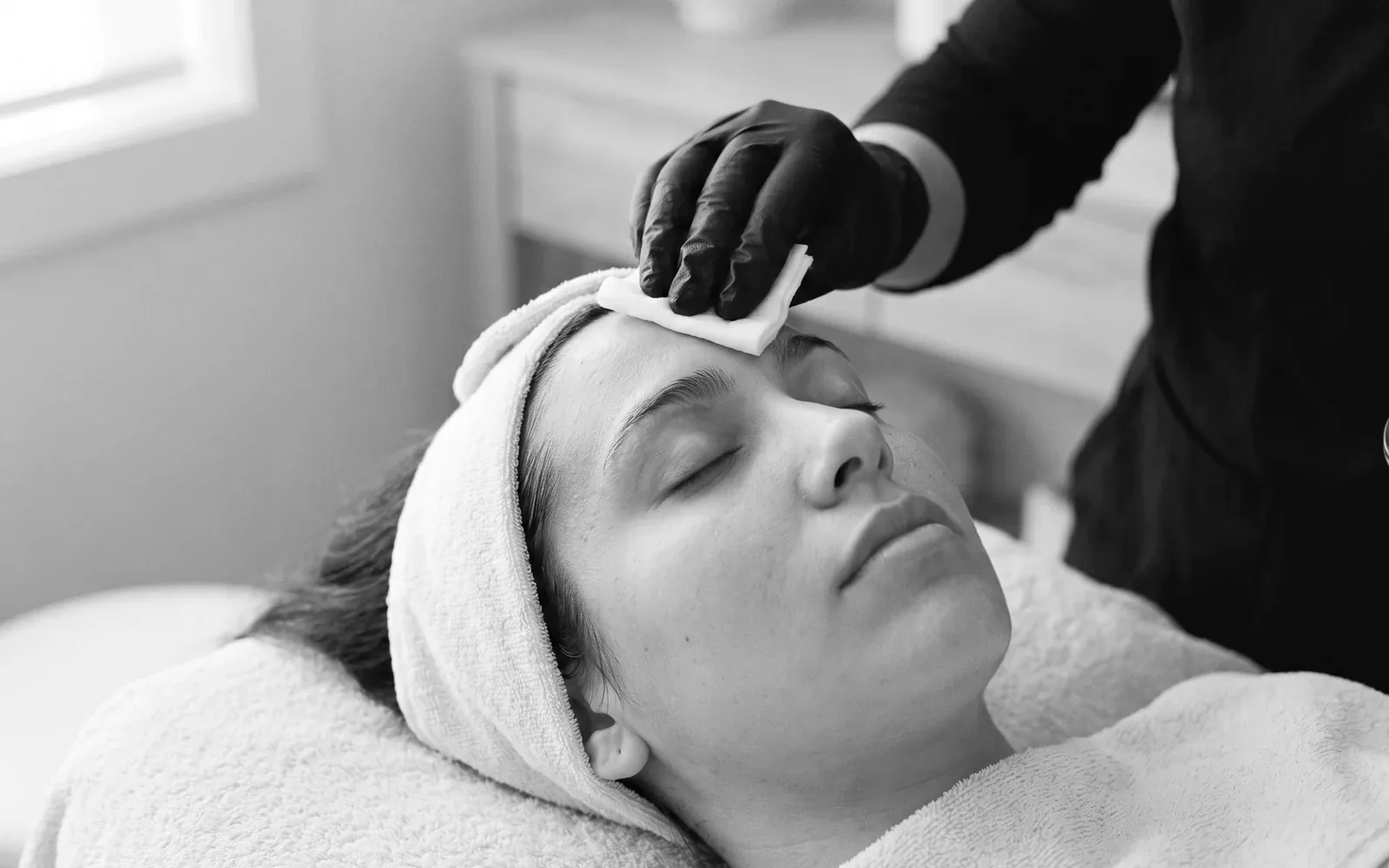
- Step 2: Cleanse. The area is cleansed of makeup, oil and skin care products, then dried.
- Step 3: Check the wax temperature. Wax should feel warm but never painful. DermNet stresses that it is very important not to have the wax too hot, to avoid burning the skin.
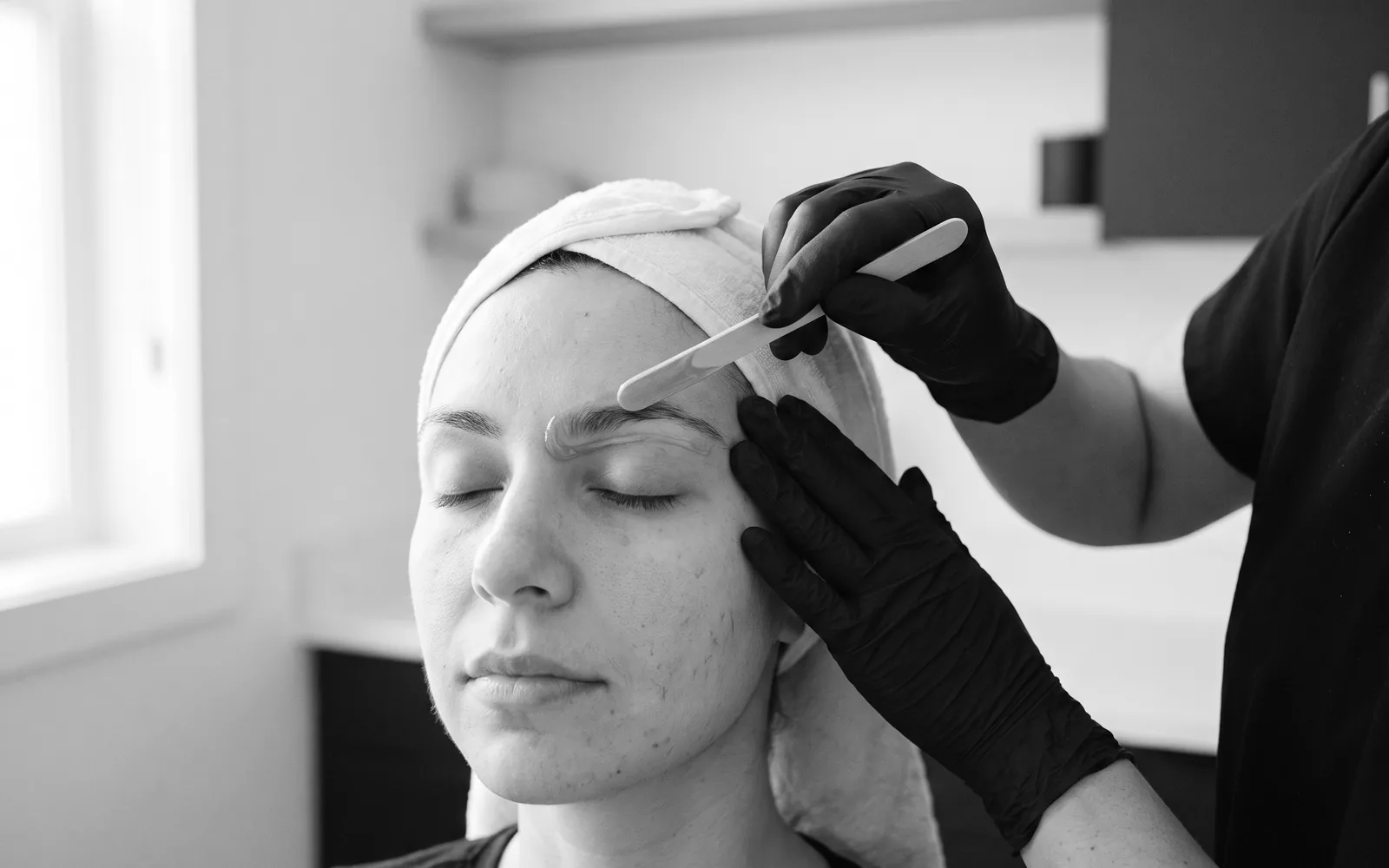
- Step 4: Apply with the grain. Wax is spread in small sections in the direction of hair growth.
- Step 5: Hold and lift. The skin is held taut and the wax is removed quickly in the opposite direction of growth, as the American Academy of Dermatology describes.
- Step 6: Press and soothe. DermNet notes that hand pressure applied right after the strip is removed can help minimize discomfort.
- Step 7: Finish and review aftercare. Stray hairs may be tweezed for a clean finish, and you leave with simple aftercare guidance.
Hygiene matters at every step. The AAD's hair removal guide points out that heated wax is not hot enough to kill germs, which is why a fresh wooden stick for every dip is the standard you should expect wherever you book.
Aftercare: How to Care for Skin After Facial Waxing
The first day after a wax is when sensitive skin needs the most gentleness. The American Academy of Dermatology recommends applying cold packs if you have pain, avoiding hot baths and showers, and using an oil-free or non-comedogenic moisturizer.
- Keep it simple. We generally suggest skipping makeup, fragrance, exfoliants and strong active ingredients on the waxed area for the rest of the day.
- Keep your hands off. Avoid touching, picking or scratching the area.
- Skip the heat. Hold off on hot showers, saunas and steam rooms for the rest of the day.
- Watch the timeline. If redness or swelling lasts more than two days, the AAD recommends seeing a board-certified dermatologist. Red, itchy bumps can be a sign of folliculitis, according to Cleveland Clinic, so contact your healthcare provider rather than treating a reaction on your own.
How Often Should You Wax Your Brows, Lip and Chin?
Hair grows in cycles, so timing is personal. DermNet notes that hair may take two to three weeks to regrow after waxing, and Cleveland Clinic says one waxing session can create results that last three to four weeks. Cleveland Clinic also notes that waxing can lead to hair growing back thinner over time, though this may vary with your hair type.
With those timelines in mind, many people book facial waxing every few weeks and adjust to how quickly their own hair grows back. A consistent schedule also helps you avoid the tweezing-and-waiting cycle that leaves fewer hairs to work with at your next brow appointment.
Common Facial Waxing Mistakes to Avoid
- Waxing too soon after starting a retinoid. Confirm timing with your prescriber first.
- Tweezing between appointments. Over-plucking leaves fewer hairs to work with at your next Brow Shaping or Brows Wax visit.
- Stacking exfoliation and waxing. Ask your esthetician how to space Dermaplaning, a Gentle Glycolic Peel or a Gentle Lactic Peel around a wax on the same area.
- Trying to DIY on reactive skin. Cleveland Clinic notes that waxing takes skill and recommends going with a pro.
- Ignoring a reaction. Persistent redness, swelling or bumps deserve a call to your healthcare provider.
How Facial Waxing Fits With Facials, Brows and Lashes
Facial waxing works well as part of a broader appointment plan. Brow waxing pairs naturally with Brow Tint or Henna Brows, and a Brow Lamination + Tint is an option if you want a fuller, groomed look. If you are considering lash services such as a Lash Lift, Lash Tint or a Classic, Hybrid or True Volume full set, we can help you plan the sequence so each service gets the attention it deserves.
Gentle facials such as the BZ Glow Express, the Clear & Calm Facial or The Quench Facial are worth asking about, and your esthetician will recommend spacing between any exfoliating step and a wax on the same area. Body treatments such as Lymphatic Drainage or Body Contouring by area can round out a relaxing routine.
Frequently Asked Questions
Is facial waxing safe for sensitive skin?
Many people with sensitive skin can wax comfortably when their skin is calm, retinoids are paused as advised, and a trained esthetician uses proper technique and hygiene. It is not right for everyone, so anyone taking isotretinoin, antibiotics or tretinoin, or managing a skin condition, should talk with their healthcare provider first.
Should I stop using retinol before brow waxing?
In most cases, yes. The American Academy of Dermatology suggests stopping retinol and prescription retinoids two to five days before facial waxing, and some dermatology references recommend a longer break for topical retinoids. Ask your prescriber for timing that fits your routine.
How long does redness last after an upper lip wax?
DermNet notes that the waxed area may be red and sensitive for a few hours. If redness or swelling lasts more than two days, the AAD recommends seeing a board-certified dermatologist.
How long do facial waxing results last?
Results vary with your hair growth cycle. Cleveland Clinic notes that one waxing session can create results that last three to four weeks.
Why Choose Professional Facial Waxing?
A professional facial wax brings together the details that matter for sensitive skin: a careful consultation, controlled wax temperature, clean single-use applicators, practiced technique on delicate areas and clear aftercare. At BZ Esthetics Studio, we take time to understand your skin before we begin, adjust our approach when your skin needs it, and tell you honestly when postponing is the better choice.
Book Your Facial Waxing Appointment in Copley, Ohio
If you are looking for gentle facial waxing in your area, BZ Esthetics Studio in Copley, Ohio welcomes clients from Fairlawn, Akron and throughout Summit County. Whether you need a quick Brows Wax, an Upper Lip Wax, a Chin Wax or a Nose Wax, or want to pair a wax with brow, lash or facial services, we are happy to help you plan the right visit. Book your appointment online and let us know about any skin sensitivities when you schedule.
Results vary from person to person, and this article is general information, not medical advice.
Book your visit
BZ Esthetics Studio is in Copley, Ohio. Every visit is by appointment.
BZ Esthetics Team
Our team of licensed estheticians and beauty professionals share their expertise to help you achieve your beauty goals. Every article is researched, fact-checked, and written with your wellness in mind.